Our Location
304 North Cardinal St.
Dorchester Center, MA 02124

304 North Cardinal St.
Dorchester Center, MA 02124
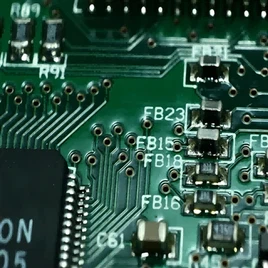
CCL is the core material for the manufacture of printed circuit boards, which is responsible for the three functions of conduction, insulation and support of printed circuit boards. The copper clad laminate has undergone lead-free, halogen-free and thinning, and is currently developing in the direction of high frequency and high speed.
Copper clad laminate market size
The proportion of CCL production in mainland China to global CCL production has continued to increase, from 47.7% in 2005 to 76.9% in 2020. Mainland China has gradually become the global CCL manufacturing center. The data shows that since 2017, the overall scale of China’s copper clad laminate market has shown an upward trend year by year, reaching 68.5 billion yuan in 2021. It is estimated that the market size of China’s copper clad laminates will reach 69.4 billion yuan in 2022.
Cost composition of copper clad laminate
The three main raw materials of CCL are copper foil, resin and glass fiber cloth, which are the main substrates for PCB conduction, insulation and support, accounting for 42%, 26% and 19% of the cost of CCL respectively. The fluctuation of the raw material price of CCL has a greater impact on the cost. Among them, the price of copper foil depends on the change of copper price, which is greatly affected by the international copper price, and the price of glass fiber cloth is greatly affected by the relationship between supply and demand.
Industry Development Trend
The copper clad laminate industry has experienced several major and far-reaching technological transformations and upgrades, namely “lead-free and halogen-free” driven by environmental protection requirements, “light and thin” driven by improved circuit integration and miniaturized smart terminals, and communication technology upgrades. “High-frequency and high-speed”, currently, “high-frequency and high-speed” is exerting an influence with the progress of 5G communication.
Lead-free and halogen-free
The green environmental protection requirements of the EU electronics industry promote the “lead-free and halogen-free” of the copper clad laminate industry. Since July 2006, the EU has begun to fully implement two directives (RoHS, WEEE), which clearly list six substances including lead, polybrominated biphenyls and polybrominated diphenyl ethers (bromine is a halogen element) as hazardous substances and restrict their use. Other countries and regions around the world responded positively to the decree. Under its influence, environmentally friendly copper clad laminates adapted to lead-free processes and halogen-free have developed rapidly.
Thinning
On the one hand, the thinning of the copper clad laminate has extremely high requirements on the production process, which is mainly reflected in the control of the gluing process, the high purity and impurity control in the production process, and the control of the flatness and dimensional stability of the substrate; To maintain or even improve performance while reducing weight, it is often supplemented by filler technology or blended resin formulations to specifically enhance the performance of CCL to meet the needs of end-use applications.
High frequency and high speed
With the upgrade of 5G communication technology, the communication frequency and transmission rate have been greatly improved, and the electrical performance requirements of copper clad laminates have been greatly improved, promoting the “high frequency and high speed” of the copper clad laminate industry. In the 5G era, the communication frequency has risen to the frequency band above 5GHz or 20GHz, and the transmission rate has reached 10~20Gbps or more. The electrical performance requirements of the copper clad laminate industry have been greatly improved.